At the end of 2023 we wrote about our first steps in gravity gradiometry within Einstein Telescope Technologies. Since 2024, this work continues in SENVIDET, short for Sensor Engineering for Noise and Vibration Isolation and Damping in Einstein Telescope: a consortium of six partners that develops low-noise sensors for the vibration isolation of the future gravitational-wave observatory. This autumn we reached an important milestone: the next version of our accurate angular sensor and gravity gradiometer has been built.
Why Einstein Telescope needs better sensors
Einstein Telescope aims to be ten times more sensitive than the design sensitivity of today’s detectors, and to reach down to frequencies as low as 3 Hz. To get there, its mirrors must stay still to within 10−20 m/√Hz. Each mirror hangs from a tall vibration isolation system, which relies on sensors to measure the motion it has to cancel. At these low frequencies, the noise of those sensors limits how well the vibration isolation system works.
One of the hardest problems is tilt. An accelerometer measures the sideways displacements that the isolation must cancel. But when the ground tilts, gravity pulls the accelerometer’s proof mass sideways as well, and the reading looks just like a sideways motion. The slower the motion, the more this matters. An angular sensor measures the tilt itself, so that together, the two sensors show the true motion.
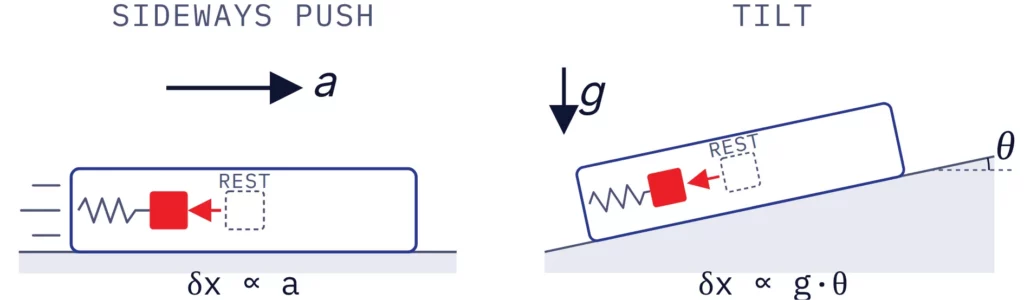
One instrument, two measurements
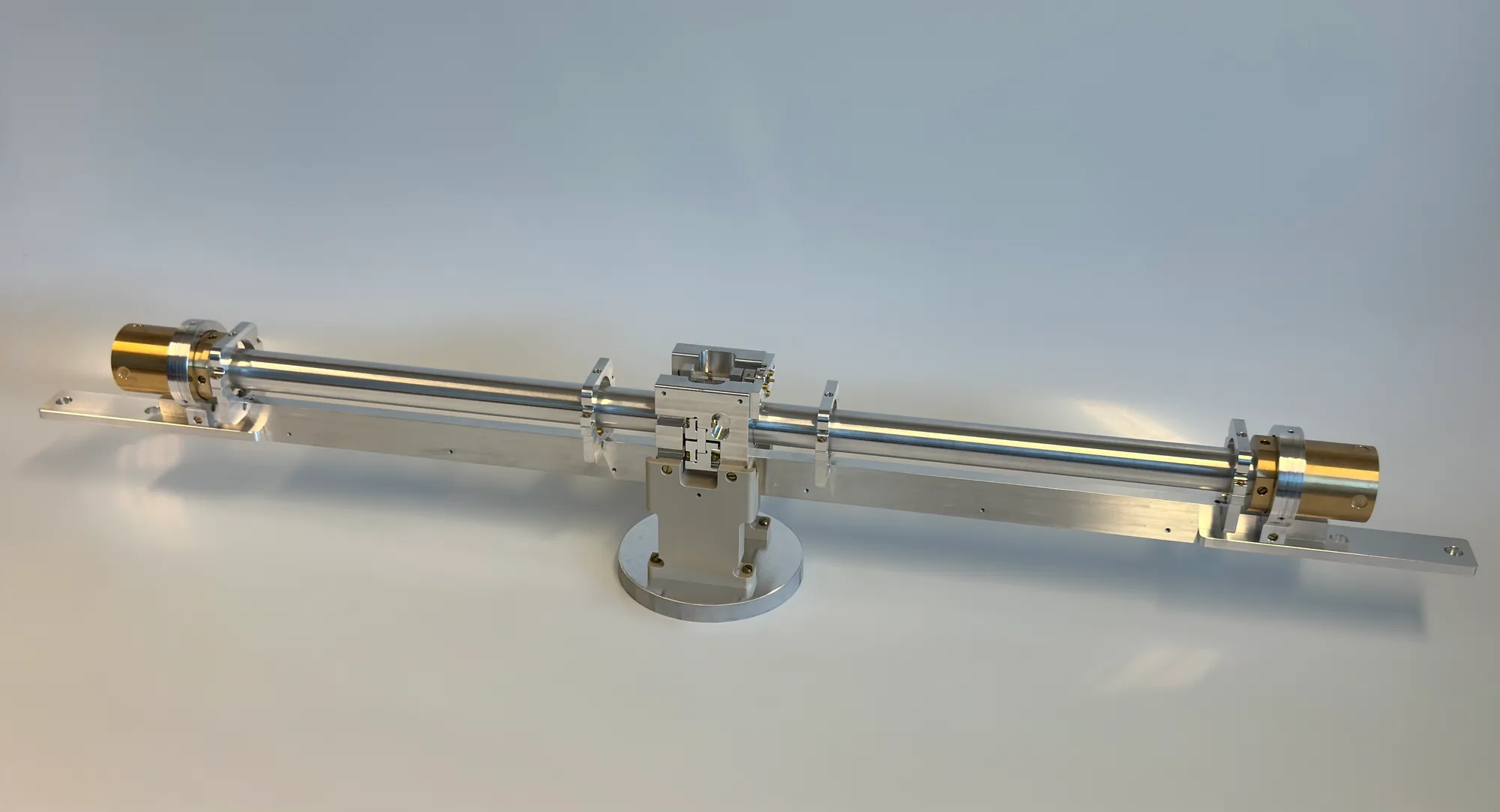
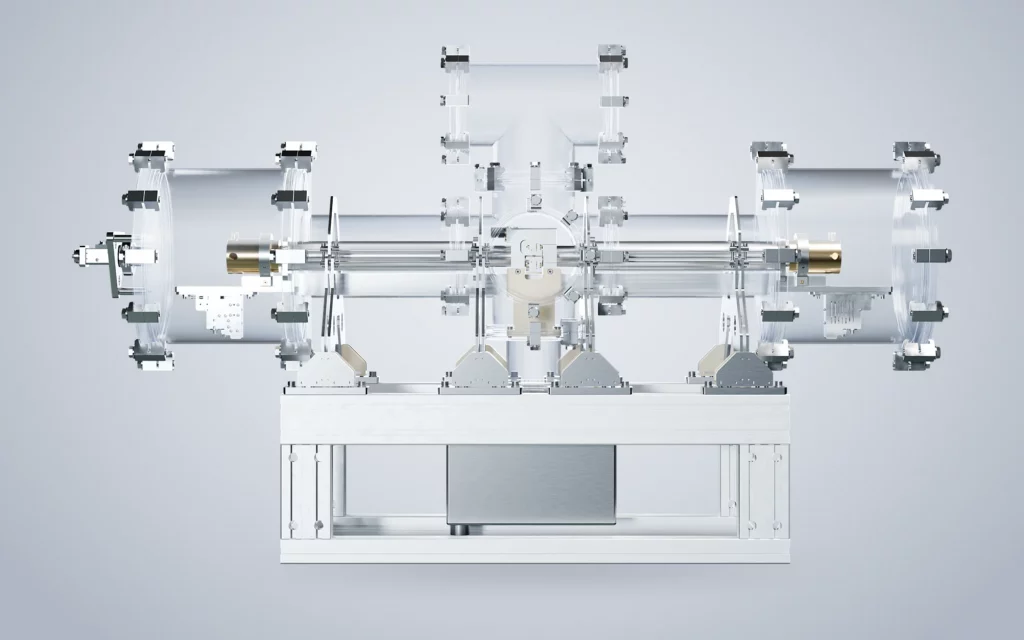
The gradiometer is a beam balance: a long beam with a mass at each end, balanced on titanium flexures. When the platform it stands on tilts, the beam stays inert, so an angle forms between the beam and its enclosure. Homodyne quadrature interferometers measure that angle at the end-masses, where the motion is largest, and an optical lever with a superluminescent diode (SLED) reads it too.
The same beam measures gravity gradients: how gravity changes from place to place. Nearby mass pulls slightly harder on one end-mass than on the other, which twists the beam. So the gradiometer doubles as an angular sensor: in Einstein Telescope, one instrument can measure the tilt of the ground and the gravity noise of moving rock.
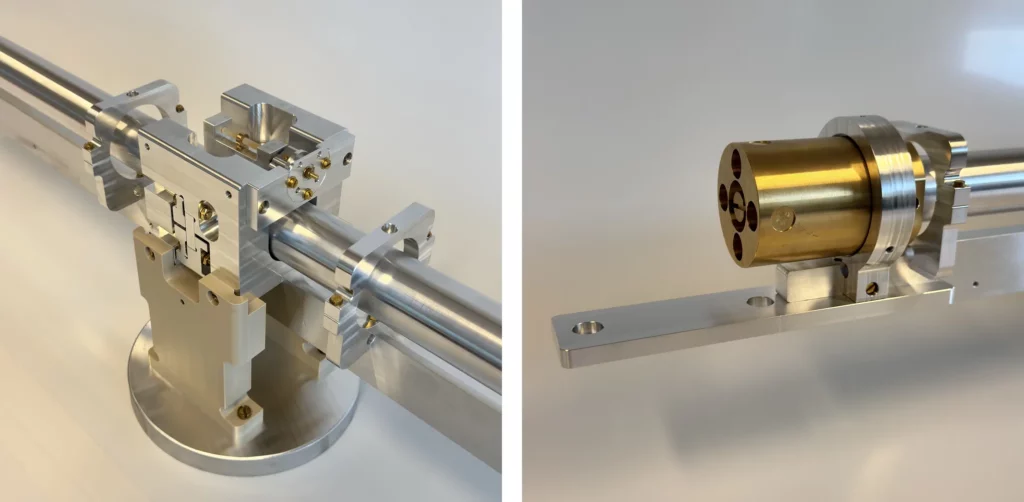
Photos: VU Amsterdam
Specifications
The gradiometer builds on our experience from our field tests in the Heimansgroeve in Limburg. It adds automated balancing, higher-quality flexures, an ultra-high vacuum enclosure and better thermal, acoustic and magnetic isolation, for more stability. The interferometric read-out at the end-masses improves the resolution.
- Tilt: <10 picoradians per √Hz, between 10 mHz and 0.5 Hz
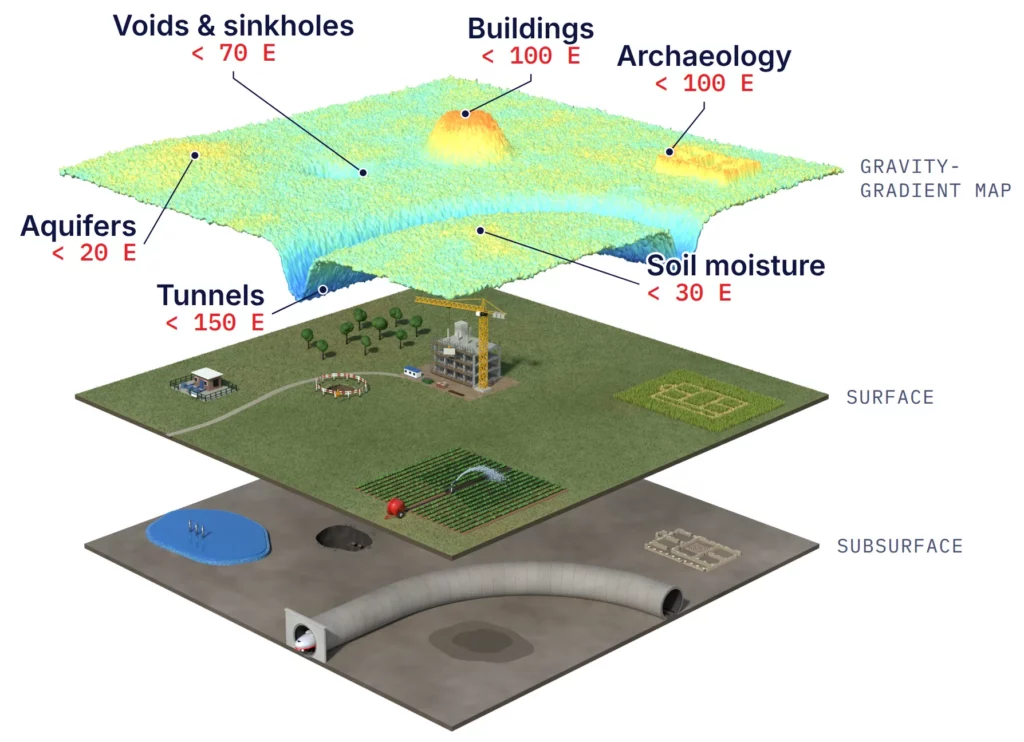
- Gravity gradients: <1 Eötvös (1 E is a difference of about 0.1 nano-g over 1 meter)
Beyond Einstein Telescope
An instrument with this sensitivity is useful far beyond gravitational-wave detection. Tilt measurements help to monitor the stability of bridges, tunnels, dams and buildings. Gravity gradients show what lies underground without drilling: hidden cavities and old mine shafts under roads, dense objects in closed containers, CO2 stored underground over the years, and how gas, oil and water move in reservoirs.
Meet the gradiometer at the Precisiebeurs
On 18 and 19 November 2026, the gradiometer is on show at the Precisiebeurs in the Brabanthallen in ’s-Hertogenbosch, at the Einstein Telescope stand (H2-13). You can see the sensor up close, outside its vacuum enclosure.
We are looking for pilot sites, launching customers and partners for applications in infrastructure, construction and the subsurface. Interested? Get in touch.
About SENVIDET
SENVIDET (2024–2027) develops low-noise sensors for the vibration isolation of Einstein Telescope. Six partners work together. Three companies develop the sensors: Somni Solutions (coordinator) a dual-axis fiber-optic accelerometer, Innoseis Sensor Technologies the angular sensor and gravity gradiometer, and Quantified Air a fiber interferometer. Demcon covers the system engineering, and Nikhef and VSL validate and calibrate the sensors. SENVIDET is co-funded by the R&D programme technology domains Einstein Telescope (project ET_C000003), which is supported by the National Growth Fund (Nationaal Groeifonds).
We acknowledge the Vrije Universiteit Amsterdam for their mechanical expertise.